
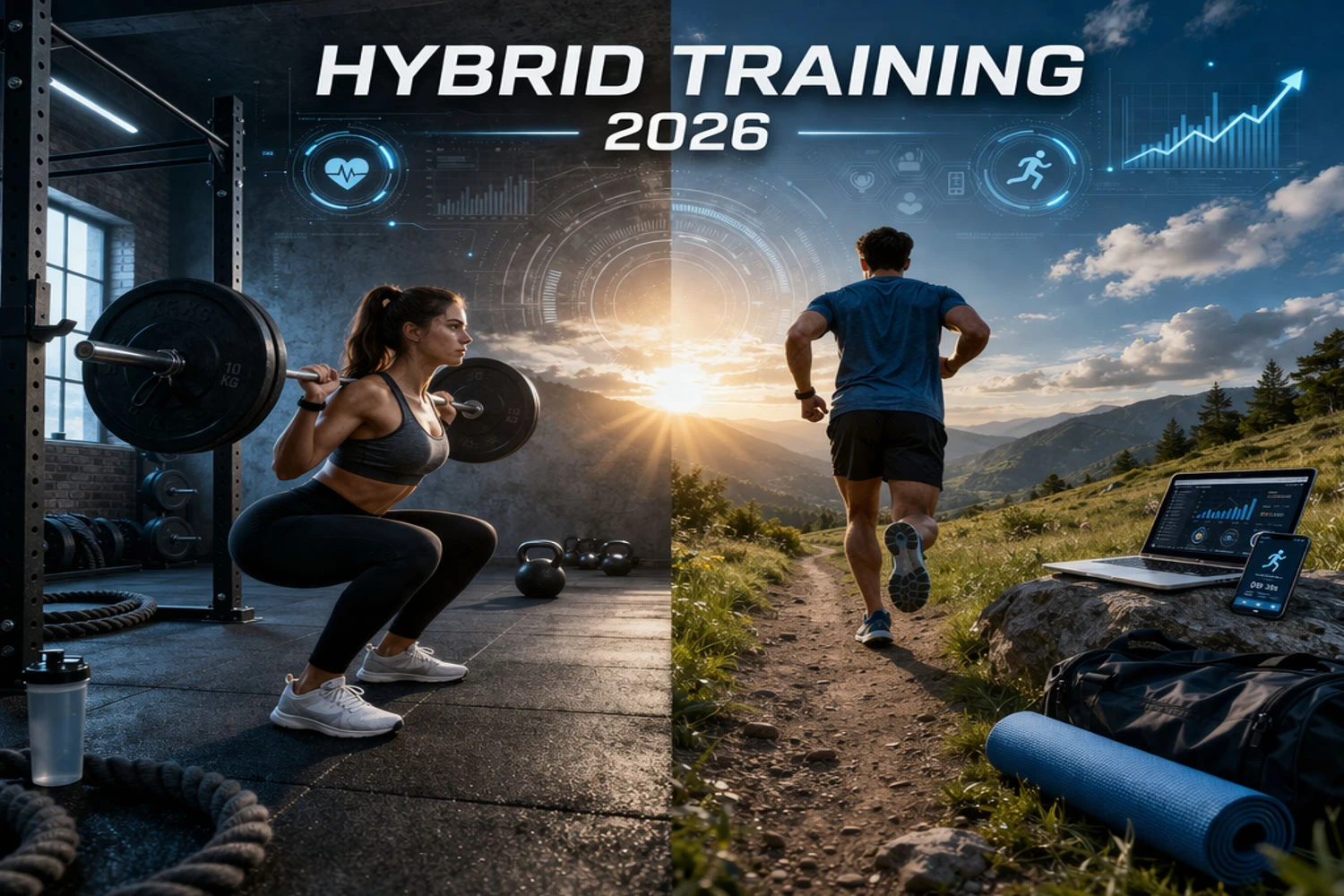
For decades, the fitness industry forced us to choose: do you want to be a “bodybuilder” or a “marathon runner”? As of March 2026, those boundaries have collapsed. The rise of the Hybrid Training 2026 movement has proven that you don’t have to sacrifice strength for stamina.
By combining heavy resistance training with “Zone 2” cardiovascular conditioning and functional mobility, today’s athletes are achieving a level of “Healthspan” and versatility that was previously thought impossible.
The Three Pillars of Hybrid Training 2026
To master this style of training, your weekly routine must balance three distinct types of physiological stress:
Pillar 1: Structural Strength (Heavy Lifting):
Focus on compound movements (Squats, Deadlifts, Presses) to maintain bone density and muscle mass.
Pillar 2: Metabolic Base (Zone 2 Cardio): Low-intensity, steady-state movement (walking, light cycling) that builds mitochondrial health and speeds up recovery.
Pillar 3: Functional Capacity (The “Finisher”):
High-intensity bursts like sled pushes, farmer’s carries, or kettlebell flows that mimic real-world physical demands.
Mobility is Non-Negotiable
In 2026, “getting big” is out; “moving well” is in. The Hybrid Training 2026 philosophy places a massive emphasis on Mobility Training. This isn’t just stretching; it’s about active control of your joints.
Recent research from the ACSM (March 2026) highlights that athletes who incorporate “Flow” movements or “Yoga-for-Lifters” twice a week reduce their injury risk by 40%. This ensures that you aren’t just strong in the gym, but capable of navigating life without chronic pain.
Structuring the Hybrid Training Split
Designing a successful Hybrid Training 2026 schedule requires a sophisticated understanding of “Interference Effect” management—the science of ensuring your cardio doesn’t stall your strength gains. In 2026, the gold standard for high-performance athletes is a 6-day rolling split that prioritizes “Phased Recovery.” This means that heavy CNS-taxing movements, such as the low-bar back squat or conventional deadlift, are strategically placed at the beginning of the week when glycogen stores and neurological readiness are at their peak. By front-loading the week with structural strength, you create a hormonal environment conducive to muscle preservation. Following these heavy sessions with “Zone 2” cardiovascular work on Tuesday allows for active recovery; the increased blood flow helps flush metabolic waste from the lower body without adding the high-impact stress of a sprint or a heavy carry.
As the week progresses, the Hybrid Training 2026 model shifts toward “Metabolic Conditioning” and functional versatility. Wednesday and Friday are typically dedicated to upper-body hypertrophy and full-body explosive movements, such as kettlebell snatches or medicine ball slams. These sessions are designed to improve “Work Capacity”—your body’s ability to perform high-intensity effort over a sustained period. To prevent burnout, Thursday is strictly reserved for “Active Mobility.” In 2026, this isn’t just basic stretching; it involves PNF (Proprioceptive Neuromuscular Facilitation) and dynamic flow sequences that bulletproof the joints. This mid-week reset is what allows hybrid athletes to tackle their “Endurance Peak” on Saturday—a long-duration run or cycle—with fresh legs and a stable core, effectively proving that elite stamina and significant muscle mass can indeed coexist in a single, well-oiled machine.
Ultimately, the beauty of Hybrid Training 2026 lies in its “Autoregulated Flexibility.” If your wearable technology indicates a high stress score on a Wednesday morning, the hybrid philosophy encourages you to swap your high-intensity functional session for an extra mobility or Zone 2 day. This data-driven approach ensures that you are training with your biology rather than against it. By the time you reach Sunday’s total rest phase, your body has been stimulated across every major energy system—oxidative, glycolytic, and phosphagen. This comprehensive stimulation is why hybrid athletes in 2026 report not only better physical aesthetics but also superior mental clarity and daily energy levels compared to those following traditional, single-modality training programs.
The “Wearable” Revolution
You cannot manage what you do not measure. In Hybrid Training 2026, athletes are using “Biometric Feedback” to adjust their volume. Using AI-integrated wearables, you can now track your Heart Rate Variability (HRV) to decide if today should be a heavy lifting day or a recovery walk. If your recovery score is low, the hybrid model suggests shifting your “Endurance Peak” to a different day to avoid burnout.
FAQ:
Q1: Won’t cardio “kill” my muscle gains?
Ans: This is a 2010-era myth. In 2026, we know that “Zone 2” cardio actually helps muscle growth by improving blood flow and nutrient delivery to the muscles. As long as you maintain a slight caloric surplus and eat enough protein (0.8g per lb), your gains are safe.
Q2: Can I do this at a home gym?
Ans: Yes. All you need is a set of dumbbells or kettlebells and a place to walk or run. Hybrid Training 2026 is about the philosophy of movement, not the specific equipment.
Q3: How long does it take to see results?
Ans: Because you are training multiple systems, you will feel the “energy boost” within 2 weeks. Visible muscle definition and cardiovascular improvements typically take 6–8 weeks of consistency.
read more: How many sets per workout